Materials for the Automotive, E-Mobility, and Railway Sectors
The automotive & transport sector is continuously evolving, driven by demands for sustainability, connectivity, performance enhancement, weight reduction of vehicles and thus fuel consumption.
LATI develops winning solutions for structural, lightweight, and robust elements, as well as flame-resistant, conductive, and self-lubricating materials; the introduction of polymer solutions in vehicles brings advantages in terms of performance, safety, consumption, design freedom, and cost.
The solutions you are looking for are available within the product families LATAMID, LARAMID, LATIGLOSS, LARTON, LATICONTHER, LATILUB, and LATIOHM.
Automotive
Automotive applications are numerous and require materials with:
- Extreme mechanical strength to support static and dynamic loads, impacts, vibrations, and fatigue in highly demanding environmental conditions.
- Thermal stability and reliability from -30°C to over 150°C continuously.
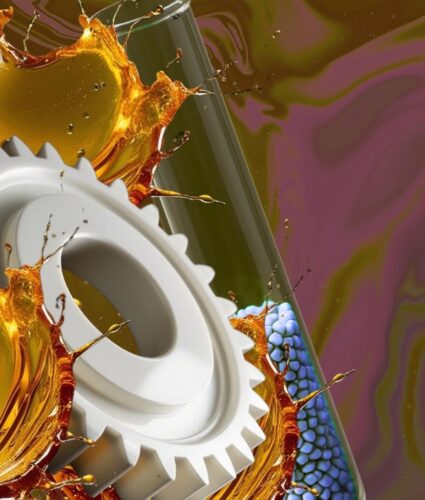
- Chemical resistance to fuels, oils, lubricants, coolants, and other service fluids.
- For electrical system parts, flame retardancy and regulatory compliance.
The IATF 16949 Certification for the entire LATI industrial system ensures the highest quality of product and service. This certification, achieved by LATI in 2023, certifies that the company operates with a quality management system that meets the stringent requirements of the global automotive industry, ensuring reliability and traceability throughout the supply chain.
Typical components made of engineering polymer: powertrain elements, manifolds, brackets and structural parts, housings for electronics, functional elements under the hood and inside the cabin.
E-mobility
Electric mobility requires materials that simultaneously combine thermal resistance, lightness, creep resistance, flame retardancy, and thermal dissipation capability.
Moreover, for all lines intended for electric current transport, the adoption of materials in orange color, which LATI has developed in various flame-retardant formulations validating their heat resistance over time, is required.
For connectors, bus bars, and technical overmoldings, here are the flame-retardant orange solutions from the LATAMID, LATER, LARAMID, and LARAMID T families.
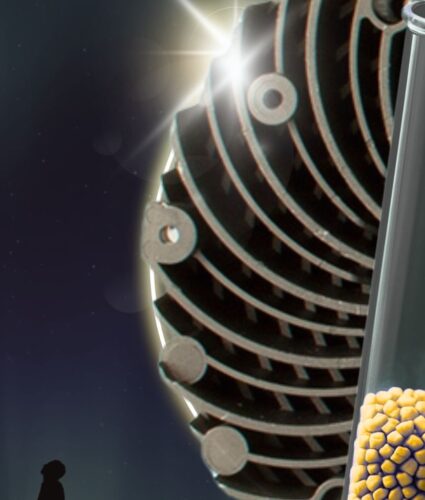
The heat dissipation produced by inverters, LED lighting, and other electronics can be achieved with LATICONTHER grades.
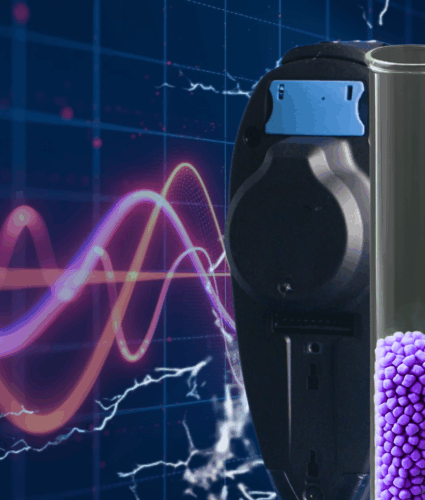
LATIOHM and LATISHIELD provide the necessary antistatic properties, electrical conductivity, and electromagnetic compatibility for applications in electronics, sensors, and connectivity, with effective shielding between 30 and 90 dB.
Railway
In the railway sector, the priority is safety in the event of a fire; therefore, it is essential to control the flammability of plastic parts as well as the emission and toxicity of fumes. LATI offers flame-retardant and non-flame-retardant compounds suitable for every application requirement and compliant with international standards EN 45545 and NFPA130.
These are materials:
- Reinforced flame-retardant: lightweight and strong, suitable for both electrical applications and structural uses as a replacement for traditional thermosets.
- Non-reinforced flame-retardant: perfect for connectors, clamps, and conduits.
- For special uses: for example, self-lubricating, thermally conductive, or for aesthetic coatings.
Discover the Materials that are Already Shaping the Future of Mobility.
News and Events for those Driving Innovation in Mobility.

LATI in Renault 2025 Panel: Thermoplastic Compounds for Electric Mobility
LATI confirms its leading role in the transition towards sustainable mobility, with high-performance thermoplastics included in Renault Group’s A-PMR 2025 panel.
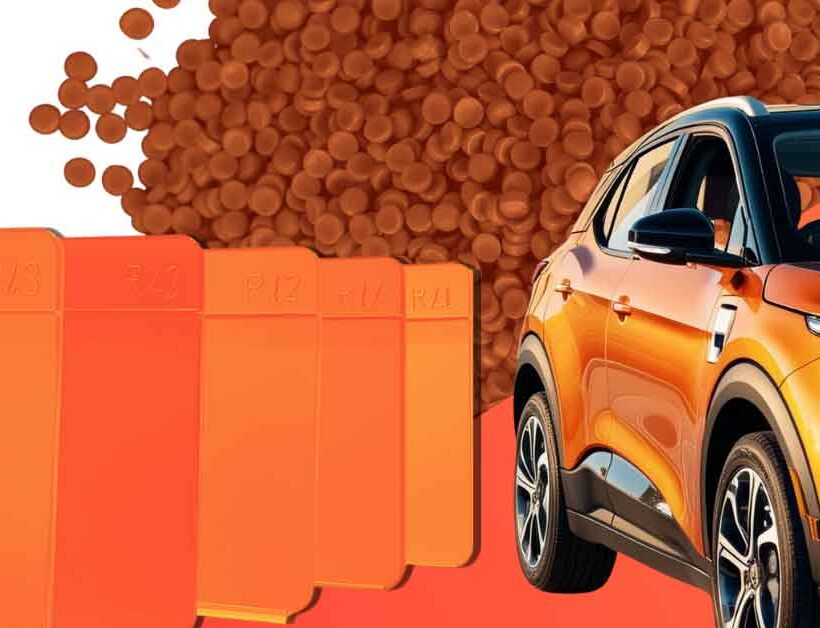
Technical Compounds in Orange: Safety and Performance for Electric Mobility
Performance, safety, and color stability: the new orange compounds for safer electric mobility, with LATI’s IATF 16949 certified quality to ensure total reliability and traceability.

LATI Thermoplastic Compounds in the Renault Panel 2024
LATI presents the list of referenced thermoplastic compounds within the 2024 Material Panel (PMR) of the Renault Group.

LATI Obtains IATF 16949:2016 Certification
We are pleased to announce that we have recently obtained the prestigious IATF 16949:2016 certification, reinforcing our commitment to quality excellence and opening new opportunities in the automotive sector.
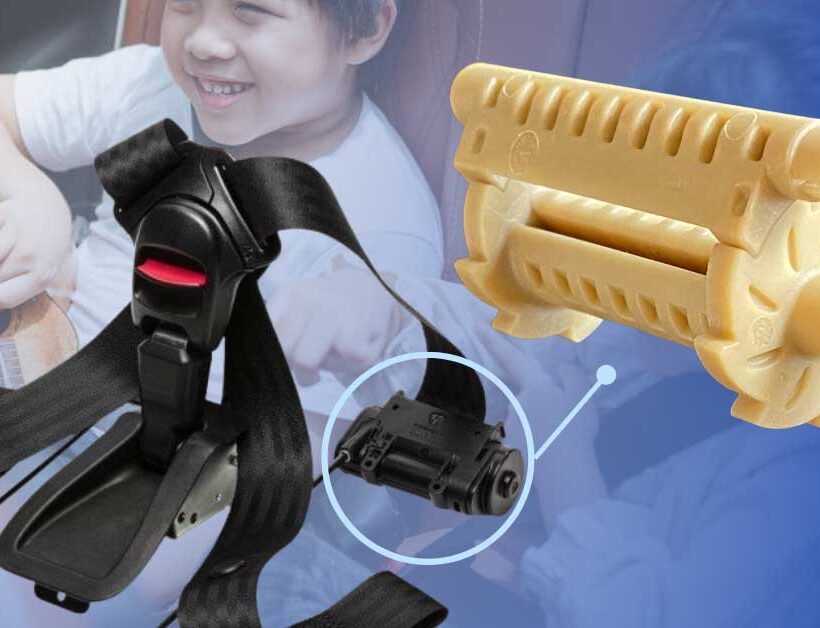
Holmbergs Chooses LATIGLOSS Compounds for the Roll Fix™ Safety System
With the precise aim of minimizing the misuse of child car seats, designers at the Swedish company Holmbergs have developed the Roll Fix™ system, a new tensioning device integrated into the seat that constantly maintains

LATI Expands the LARAMID Range: Introducing Pa9t, the High-Performance Polyamide
To meet the increasingly ambitious challenges of industrial design, LATI expands the LARAMID family by introducing a new polymer with great versatility, PA9T.
F.A.Q.
Frequently Asked Questions
The temperature range normally present under the hood of internal combustion engines varies between -30 and +150°C. For reasons of thermal and chemical resistance, it is advisable to opt for compounds based on PBT, PPA, PA9T, and PPS.
Certainly, plastic applications used in the power lines of electric cars can be made with UL-certified compounds, flame-resistant and colored in orange. The tint remains recognizable even after the thermal aging cycles imposed by the strictest automotive standards.
We have a wide range of halogen-free and red phosphorus-free flame-retardant compounds, featuring CTI PLC 0 and UL94-V0 certification down to 0.4 mm. The glow wire performance is extremely high, as well as the toughness and moldability on thin sections. Of course, they are also available in the orange shades required by the sector.
LATI has an ever-growing number of compounds certified according to the European standard EN45545 and now also in compliance with the NFPA130 standard. All certified materials, with their respective classifications, can be consulted on the LATI website.
IMDS (International Material Data System) is an online platform developed to support compliance with Directive 2000/53/EC – ELV (End of Life Vehicle). It allows suppliers throughout the automotive supply chain to declare the composition of materials used in their products. This system facilitates transparency and traceability of substances used, particularly those listed in the GADSL (Global Automotive Declarable Substance List), contributing to responsible material management and sector sustainability.
To obtain the updated MDS of a material purchased from LATI, simply fill out the appropriate request form available on our website or contact your LATI sales representative. Once the request is received, LATI will provide the document through the IMDS system, allowing the customer to integrate the information into their component MDS and effectively respond to the regulatory requirements of the automotive sector.
In addition to IATF certification, LATI has been actively participating in the IMDS system since its introduction, offering its customers concrete support in managing material information. This allows for quick and compliant responses to automotive manufacturers’ requests, improving competitiveness and regulatory preparedness throughout the supply chain.