

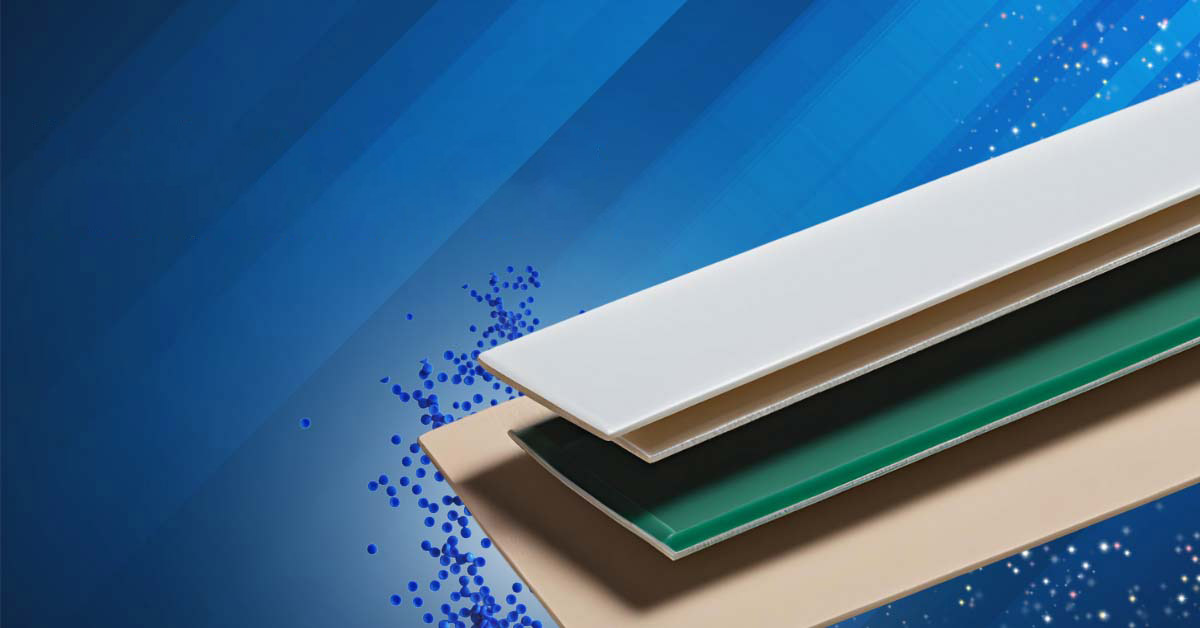
LATI and PHT – Plastiques Haute Technologies offer advanced solutions for creating functional prototypes in plastic materials. The production of sheets and rods in technical compound, through high-temperature compression techniques, ensures homogeneous and defect-free products, ideal for preliminary checks and testing. With over thirty years of experience, PHT stands out for the reliability and quality of its semi-finished products, essential for the development of complex and detailed projects.
The development of a new project is articulated in different phases, ranging from the initial idea to the creation of functional prototypes. This last step proves particularly critical when it comes to items to be made using plastic materials for injection molding. Producing prototypes of complex objects, perhaps using reinforced technical compounds, proves extremely complicated if not impossible unless a prototype mold is built; an often very expensive tool whose industrial reliability and scalability are not assured.
LATI&PHT: Experience and Professionalism
When it comes to natural polymers or thermoplastic compounds, it is very complex to produce homogeneous and compact solid blocks that can be cold-worked, e.g., for turning or milling. Not all plastic materials are suitable for being transformed into solids of great thickness, and in any case, the process can be long, expensive, and of uncertain outcome. Due to the natural shrinkage of polymers, also favored by the slow and gradual cooling imposed by the large thickness, it can happen to find defects inside the processed blocks: blowholes, cracks, inhomogeneities, and tensions that then lead to deformations.
The knowledge and professionalism of those who create these semi-finished products is fundamental for the success of the process, and the French company PHT can put over thirty years of experience in the production of bars, sheets, and blocks in plastic material on the table.
The PHT Process: High-Temperature Compression
The PHT process can be summarized as a high-temperature compression of plastic granules: the progressive formation of the solid is accurately monitored during the production phase by dedicated computerized systems. With this technology, PHT makes available to the market solid geometries of large dimensions, for example, sheets of 1200 x 1000 x 130 mm. The available materials? From amorphous polymers like PS, PSU, PES, and PPSU, natural or reinforced with glass fiber, to semi-crystalline ones like LATI’s LARTON G/40, a PPS reinforced with 40% glass fiber. The reinforced PPS is particularly suitable for high-temperature applications, in the presence of aggressive chemical environments, and for dimensionally very precise objects. The possibility of obtaining functional prototypes of LARTON G/40 from solid constitutes a point in favor for anyone who wants to verify and test the performance of the material before making a mold.
PHT manages to offer perfectly homogeneous solid blocks of LARTON G/40, without any defects, benefiting both the workability and reliability of the generated prototype.
 Accessibility Statement